
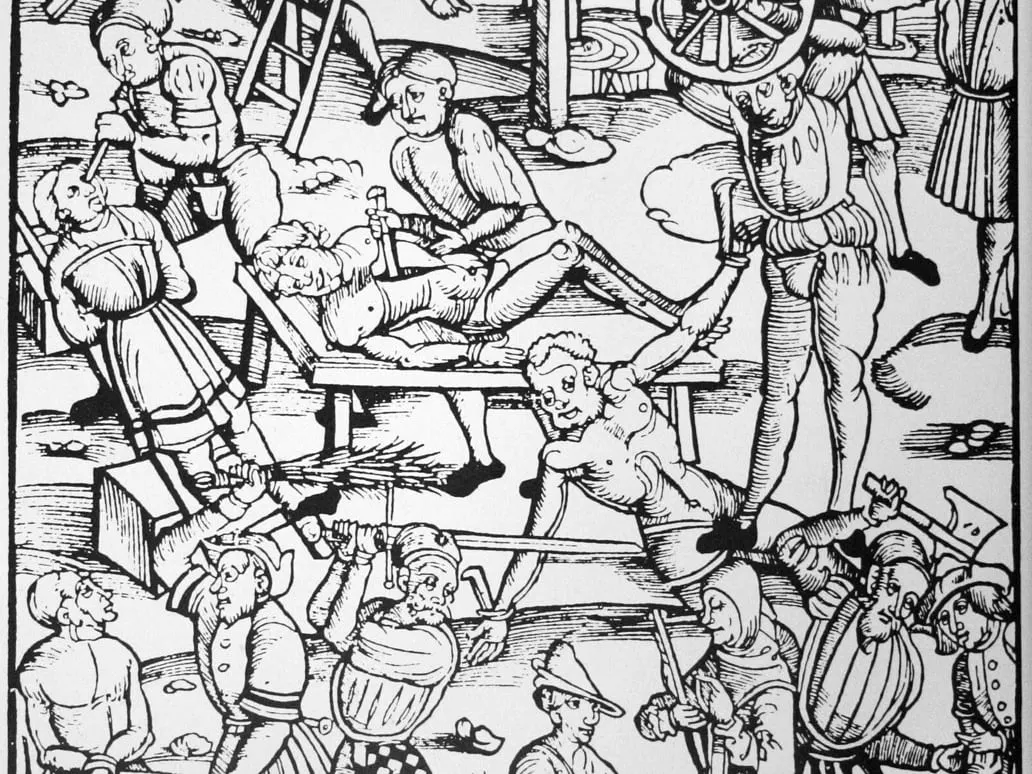
 Symbolbild
The witch hunts of the early modern period were a Europe-wide phenomenon that also reached medieval and early modern Speyer. Between the 16th and 18th centuries, people - mostly women - were accused of witchcraft, forced into confessions under torture and executed. In recent decades, historical research has begun to reconstruct their fates and to understand the structural conditions behind the persecution.
Origins of the persecution
The first documented witch trials in Speyer date to the 16th century. They began with suspicions from the accused’s own surroundings: neighbors, former acquaintances, sometimes family members accused people of having caused harm through diabolical powers.
Rumors and denunciations played a decisive role. In a climate of superstition, fear and social mistrust, a vague claim was often enough to set proceedings in motion. Church and secular authorities took such accusations seriously, because witchcraft was considered a real threat and was understood as heresy.
Trials and victims
The proceedings usually followed a similar pattern: arrest of the accused, interrogation, torture to extract a confession, verdict, execution. Common methods of torture included:
- Thumbscrews
- The rack
- Water torture
- Burning with hot irons
Under such conditions, confessions were predictable. Those who held out were often convicted anyway; those who confessed were almost always executed.
The exact number of victims in Speyer is not fully documented, as many records were lost. What is clear is that the persecution went on for decades and cost several dozen people their lives.
The role of superstition and society
Popular belief in harmful magic was omnipresent in the 16th and 17th centuries. Crop failures, illnesses and sudden deaths were frequently attributed to demonic forces. In times of famine, war - such as the Thirty Years’ War - and plague, communities looked for scapegoats, and the witch was a socially available figure.
Denunciations often arose from personal conflicts, envy or economic tensions. Those perceived as outsiders were especially at risk: single older women, midwives, healers, the socially marginalized.
The legal framework
The legal basis of the persecution was provided, among other things, by the Malleus Maleficarum (Hammer of Witches) by Heinrich Kramer, a handbook for inquisitors from 1486. It laid down methods for identifying and convicting witches and was applied in practice in many trials.
The trials were conducted partly by church courts, partly by secular ones. In Speyer the legal situation was complex, given the Imperial Chamber Court and the episcopal jurisdiction. The Inquisition played a role, but in a Speyer that had become Protestant through the Reformation, it no longer had the weight it carried in Catholic regions.
The end of the persecution
The witch hunts did not end on a clear date; they faded away gradually with the Enlightenment in the 18th century. Skepticism toward torture and confessions, new approaches in legal philosophy and a growing concept of reason made the trials increasingly untenable. The last witch trials in German-speaking lands took place in the late 18th century.
Reappraisal and remembrance
Since the late 20th century, historians have begun to research the witch hunts systematically. In many cities the victims have been posthumously rehabilitated and memorials established. In Speyer, too, remembrance is part of the historical reckoning - within the wider context of the confessional conflict that also shaped the age of the Imperial Cathedral.
Frequently asked questions
When did witch trials take place in Speyer?
Mainly in the 16th and 17th centuries, with echoes into the 18th century.
Who was accused?
Predominantly women, often socially vulnerable: single older women, midwives, healers, outsiders. Occasionally men as well.
Which methods of torture were used?
Thumbscrews, the rack, water torture and burning with hot irons were widespread. They served to extract confessions.
What role did the Malleus Maleficarum play?
The handbook written by Heinrich Kramer in 1486 was a central theoretical and practical basis for witch trials across Europe.
How many victims were there in Speyer?
Exact figures are missing due to incomplete sources. Estimates speak of several dozen people executed in Speyer and the surrounding area.
Why did the persecution end?
The Enlightenment brought skepticism toward torture and superstition, legal reforms and a changed concept of reason. The persecution faded away step by step in the 18th century.
* Tours & tickets from GetYourGuide. If you book through the markers we earn a commission, at no extra cost to you.