
Between 1618 and 1648, Speyer lived through one of the darkest chapters of its history. The city lay on one of the central march routes of the warring parties and was occupied in turn by Spanish, Swedish, French and imperial troops. Its once-mighty city wall was barely a match for modern siege techniques.
Refuge, hospital, supply station
During the war, Speyer repeatedly served as a supply station for passing troops. Soldiers received food, quarters and medical care - often at the citizens’ expense. The wounded from battles in the region were brought into the city, and its medical facilities were regularly overcrowded.
Civilians from the surrounding countryside also sought shelter in Speyer. The streams of refugees put additional strain on already stretched municipal resources.
Changing occupations
Over the course of the war, various powers controlled Speyer. Spanish, Swedish, French and imperial troops took turns. Every occupation brought billeting, looting and political pressure. The city tried to keep the worst at bay through payments and diplomatic skill, but the loss of self-determination was considerable.
The city wall loses its meaning
Speyer’s medieval fortifications had once been impressive, but by the 17th century they were militarily obsolete. The massive wall and gate towers could hardly withstand artillery fire. A small mercenary force was maintained within the walls as the city’s armed strength, but its effect remained limited. Large open areas inside the ring of walls were used as gardens - a sign of how thinly the city could actually be defended.
Population collapse and economic crisis
The war led to a drastic decline in population. Many inhabitants fled; others died of disease, hunger or direct violence. At times, Speyer was nearly deserted.
Economically, the situation was devastating:
- Farmland in the surrounding countryside was laid waste.
- Trade and crafts came to a standstill.
- Heavy war debts burdened the city treasury for decades.
The social hierarchy was thrown into disarray. Patricians lost their status, new families rose, traditional structures broke down.
Conflicts between citizenry and clergy
An older conflict smoldered in the background: the privileges of the clergy - wine taverns, legal jurisdiction, tax-free property in mortmain - had irritated the council and citizens since the Middle Ages. During the Thirty Years’ War, the tensions between the predominantly Protestant citizenry and the Catholic clergy - a consequence of the Reformation - escalated into a veritable feud of mutual sanctions, economic measures and slander.
The cathedral chapter was the council’s main adversary. Taxes, tolls and jurisdiction were constant points of dispute. The conflicts at times led to destruction in the surrounding area.
Debt problems and economic disadvantages
Speyer was not alone with its debts; the whole Empire was financially bled dry. The Imperial Recess of 1654 provided for a regulation and reduction of debts, but negotiations with creditors dragged on into the 1670s.
To make matters worse, the Electoral Palatinate withdrew economic advantages from Speyer. The city tried to counter with public works: first sewer construction, improvements to the road network, the expansion of a second harbor. The measures were not enough to resolve the structural crisis.
The second catastrophe
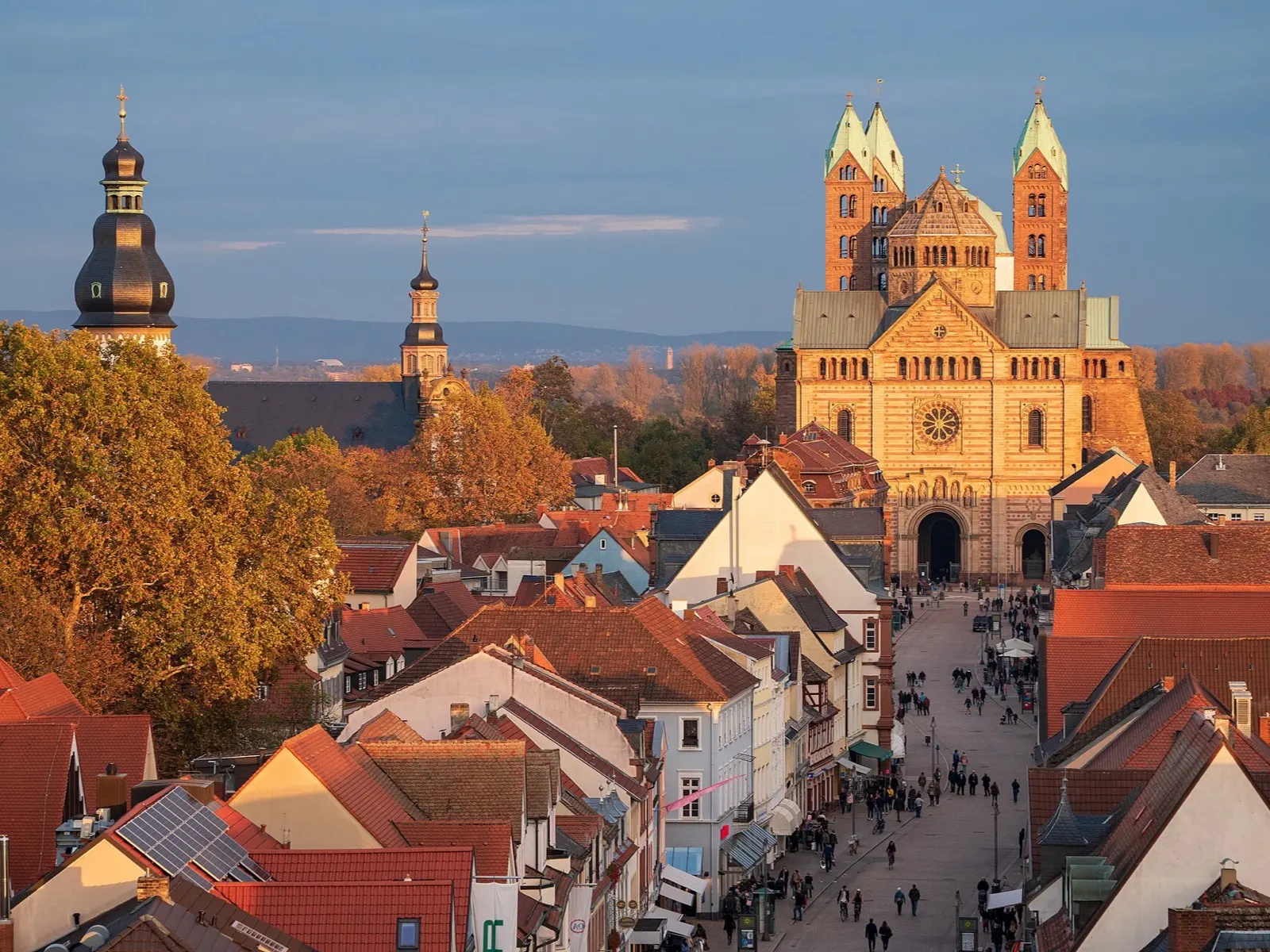
Hardly had Speyer somewhat recovered from the Thirty Years’ War when the next blow came: in 1689, during the War of the Palatine Succession, French troops burned the city almost completely to the ground. The medieval fabric that had survived for centuries was destroyed - only the Imperial Cathedral and a few other buildings survived the fire. What we see in the Old Town today is essentially a Baroque reconstruction on the old street plan; more on this in the article on Speyer’s architecture.
Frequently asked questions
Was Speyer destroyed in the Thirty Years’ War?
The city was not completely destroyed, but it was badly damaged by occupations, looting and population collapse. The final destruction came only in 1689 at the hands of French troops.
Which troops occupied Speyer?
Over the course of the war, Spanish, Swedish, French and imperial troops - often alternating several times.
Why couldn’t the city wall protect Speyer?
The medieval fortifications were militarily outdated by the 17th century and no match for modern artillery.
How sharply did the population fall?
Exact figures are hard to reconstruct, but at times Speyer was nearly deserted. Recovery took decades.
What were the war’s long-term consequences?
Population loss, economic crisis, heavy debts and a lasting weakening of the city’s position as an imperial city. Recovery was set back further by the fire of 1689.
* Tours & tickets from GetYourGuide. If you book through the markers we earn a commission, at no extra cost to you.