
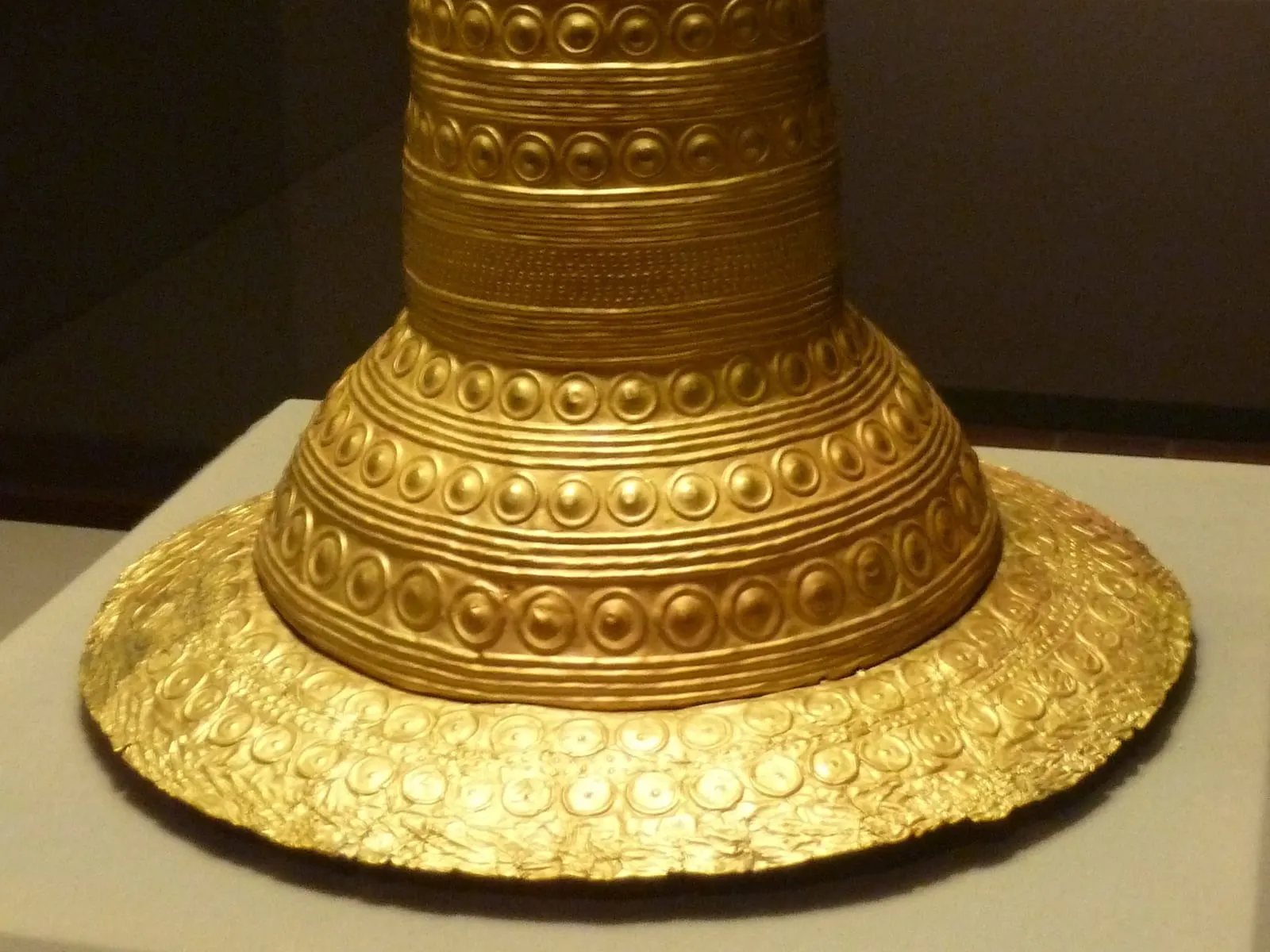
For archaeologists, Speyer is a dense site. Excavations across the city have documented traces from the Neolithic through the Celts and Romans to the Middle Ages. The most important finds are on display in the Historical Museum of the Palatinate and in the Archaeological Window.
The oldest finds: early Bronze Age
On the grounds of the Deaconess Institution in Speyer, skeletal remains were found that date to the early Bronze Age. Radiocarbon dating produced values of 1861-1616 BC, making these burials some of the oldest documented finds in the region.
Grave goods such as a small gold spiral are among the earliest gold finds of the German Southwest. Such finds are rare and provide important clues to the trade relations and social structures of the Bronze Age.
Roman remains
The most extensive finds date from Roman times:
- The vicus Noviomagus: remains of the unfortified settlement with houses, workshops and administrative buildings.
- Burial grounds: several Roman cemeteries with sarcophagi and grave goods.
- Villas and temples: remains of agricultural estates and sanctuaries in the surrounding countryside.
The finds show a well-organized Roman settlement with trade, crafts and religious life. To this day, every major construction project in the Old Town cuts into Roman layers.
Celtic princely graves
From the era before the Romans come Celtic princely graves in the wider region. Richly furnished burials with gold jewelry, weapons and drinking vessels attest to the buried individuals’ high social status and to the craftsmanship of Celtic culture.
A particularly unique find is a Celtic signal horn made of metal, rarely preserved, suggesting ritual or military use.
Middle Ages and early modern period
Within the city, medieval fortifications, remains of the Jewish mikvah (see the ShUM World Heritage in the Jewish Courtyard), well installations and the foundations of churches and monasteries have also been documented. These finds complement the picture of the high medieval imperial city with concrete archaeological evidence.
Historical Museum of the Palatinate
The Historical Museum of the Palatinate is the central address for Speyer’s archaeological finds. Highlights:
- The Roman wine from the 4th century, the oldest liquid wine sample in the world.
- The Golden Hat of Schifferstadt, a Bronze Age ceremonial hat made of sheet gold.
- An extensive collection of Roman ceramics, jewelry and everyday objects.
The museum combines scholarly depth with accessible presentation and is among the most visited institutions in the region.
The Archaeological Window
The Archaeological Window in the city center is a small but rewarding stop. Here the state archaeology service of Rhineland-Palatinate presents current excavation results and offers insight into the archaeologists’ work. A good place to experience Speyer’s past beyond the big museum exhibitions.
State archaeology of Rhineland-Palatinate
The state archaeology service protects and documents archaeological sites across Rhineland-Palatinate. It conducts rescue excavations during construction, documents finds scientifically and cooperates with universities and museums. Speyer is one of the most important bases of this work - it complements the picture drawn in the article on Speyer’s architecture and keeps turning green spaces like Adenauer Park into excavation sites.
Frequently asked questions
What is the oldest find in Speyer?
Skeletal remains from the early Bronze Age (1861-1616 BC) with grave goods such as a small gold spiral.
Where can you see Roman finds?
The Historical Museum of the Palatinate holds the largest collection, including the Roman wine. The Archaeological Window adds current excavation results.
What is the vicus Noviomagus?
The unfortified Roman settlement from which Speyer emerged. It existed from the 1st into the 4th century.
Are there still Celtic traces?
Yes - above all Celtic princely graves in the region document the pre-Roman cultural layer. The metal signal horn is a particularly remarkable piece.
Where does the state archaeology service work?
The state archaeology of Rhineland-Palatinate has an important branch in Speyer and oversees excavations and research across the region.
* Tours & tickets from GetYourGuide. If you book through the markers we earn a commission, at no extra cost to you.