
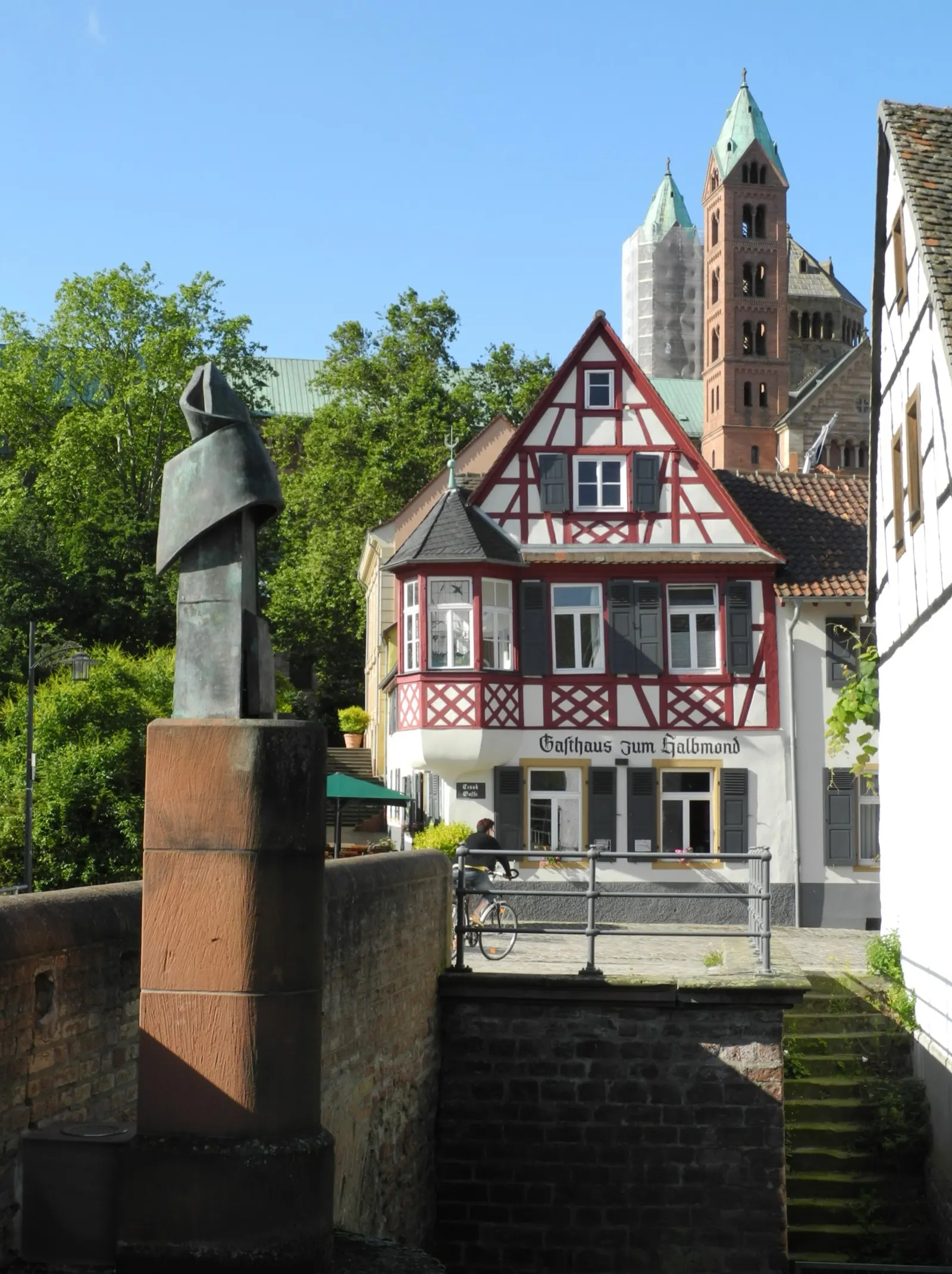
Speyer’s inns carry centuries of history. As a trading city on the Rhine and the venue of the imperial diets in medieval Speyer, the city needed a dense hospitality trade early on. Some of the historic addresses still exist; others have vanished. A short tour through the culinary and social history of the city.
Medieval roots
Speyer’s first inns emerged in the Middle Ages along the trade routes. They offered lodging, food and a change of horses to merchants, pilgrims and diplomats. The location on the Rhine and on the route between Frankfurt and Strasbourg made Speyer an important waypoint.
Imperial diets and court assemblies brought emperors, princes and large retinues to the city. Providing for these guests was a challenge and an opportunity at once. The inns developed not only into places to stay, but into social meeting points where deals were struck and political conversations held.
The influence of the wine trade
For centuries, Speyer was one of the most important wine trading cities on the Rhine. That importance deeply shaped its inn culture. Many houses specialized in serving Palatine wines and became meeting places for wine lovers and merchants. Deep vaulted cellars served as storage and remain among the special features of some inns to this day.
Architectural features
The historic inns show the typical marks of old construction:
- Half-timbered facades (some preserved, some plastered over in the 18th century)
- Stone vaulted cellars for storing wine and provisions
- Prestigious entrances with wrought-iron work
- Taprooms with wood paneling and tiled stoves
Many of these houses were rebuilt in Baroque forms after the fire of 1689, often on medieval cellar vaults.
Famous addresses
Some of Speyer’s best-known inns (historic or still operating):
- Zum Domnapf: Right on the cathedral square, one of the oldest inns in the city. Serves traditional Palatine cuisine with a view of the Imperial Cathedral.
- Alter Hammer: 18th century, originally a smithy. Today an inn with regional specialties and selected wines.
- Rathauskeller: In the cellar of the old town hall, popular with locals and visitors alike, with a historic atmosphere.
Some legendary houses have disappeared or been repurposed. Their traces can be found in old city views and travel accounts.
Regional specialties
If you dine in a Speyer inn, try the regional classics:
- Speyer pretzels: crisp crust, soft center, coarse salt. Their origins go back to the Middle Ages.
- Palatine Saumagen: potatoes, meat and spices cooked in a pig’s stomach. A hearty traditional dish famously served by Chancellor Helmut Kohl.
- Liver dumplings: classic Palatine home cooking, often with sauerkraut and fried potatoes.
- Riesling and Dornfelder: the region’s most important grape varieties.
Wine at the cathedral
Once a year Speyer becomes the center of the Palatine wine world: “Wein am Dom” is the largest wine fair of the Palatinate. More than 167 wineries and estates present their produce in the Old Town. The event draws visitors from across southern Germany and from across the nearby borders.
Inns today
Speyer’s modern inns combine tradition with contemporary cooking. Young chefs pair regional ingredients with international techniques, and classic dishes are reinterpreted. The historic atmosphere remains, but the menu is often surprisingly modern.
At the same time, the inns remain social meeting places. People meet here after work, celebrate family occasions or wind down a day trip. The mix of locals and visitors keeps the atmosphere lively - a complete overview of current addresses can be found on the restaurants page, with places to stay under hotels in Speyer.
Frequently asked questions
Which inns have medieval roots?
Several houses in the center, including the Gasthaus zum Domnapf and the Rathauskeller, stand on medieval cellars. The buildings above are mostly Baroque.
What should I try in Speyer?
Speyer pretzels, Palatine Saumagen, liver dumplings and of course a Palatine Riesling or Dornfelder.
What is “Wein am Dom”?
The largest wine fair of the Palatinate, held annually in the Old Town. More than 167 wineries present their wines.
Why are there so many wine cellars?
Speyer was a wine trading city for centuries. The deep cellars served to store wine and are today part of many inns’ special charm.
Are the inns just for tourists?
No. Many houses are a natural meeting point for locals. That is what keeps the atmosphere authentic and lively.
* Tours & tickets from GetYourGuide. If you book through the markers we earn a commission, at no extra cost to you.